Interchange Fees Explained: Where Your Card Fees Actually Go
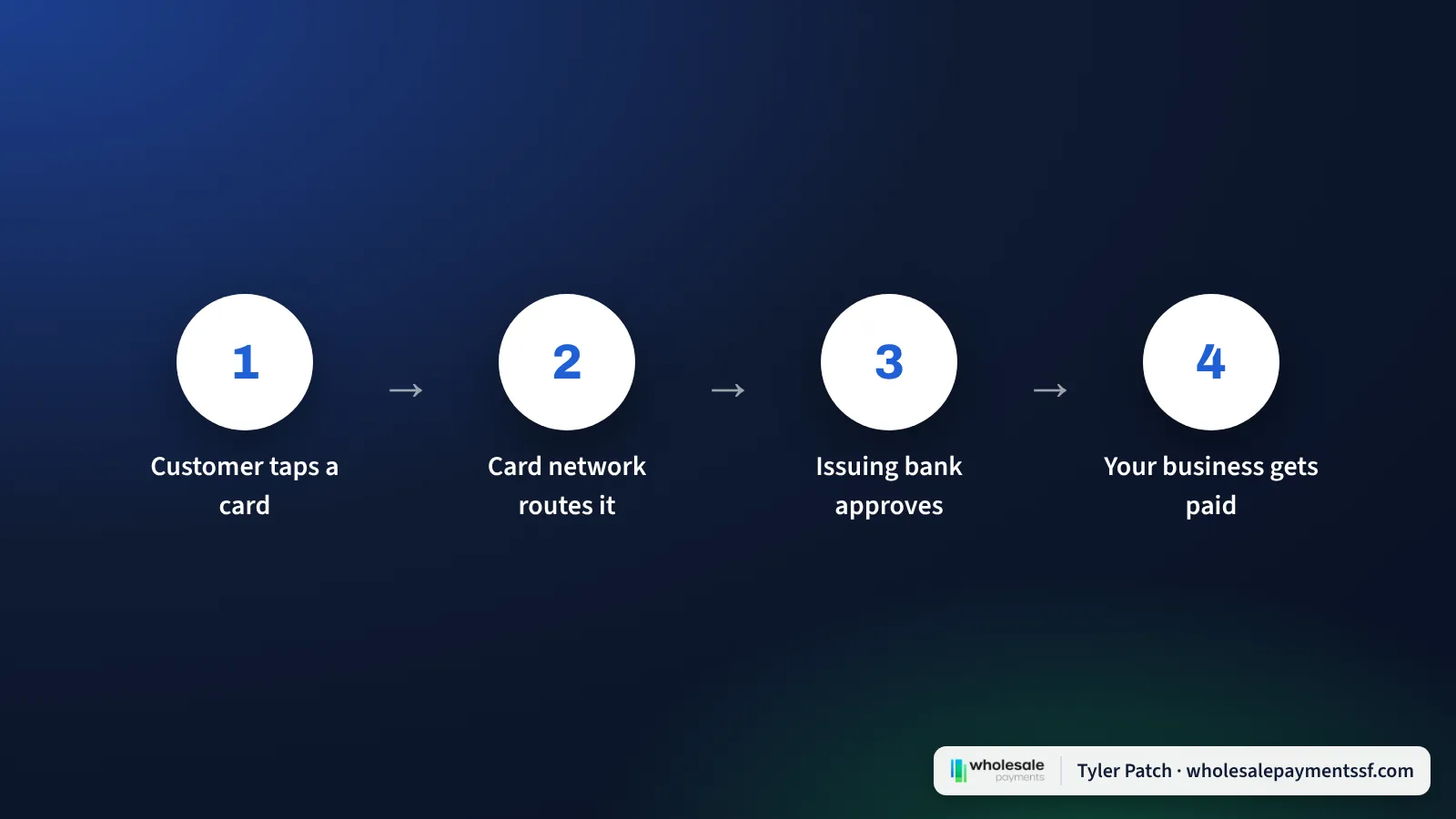
Interchange is the biggest part of every card fee you pay. Once you understand it, your merchant statement starts to make sense.
What interchange is
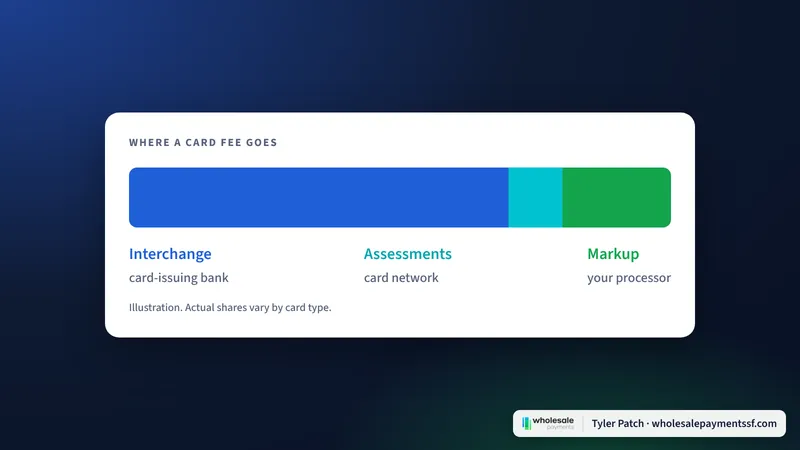
Interchange is a fee paid to the bank that issued your customer's card. It's set by the card networks (Visa, Mastercard, Discover) and it's the same no matter which processor you use. It's usually a percentage plus a few cents per sale.
Where each dollar goes
- Interchange goes to the customer's bank. It's the biggest piece.
- Network (assessment) fees go to the card brand.
- Processor markup goes to your processor. This is the only part that changes from one provider to the next.
Why some cards cost more
- Rewards and premium cards carry higher interchange. The customer's points and cash back are paid for by the business.
- Business and corporate cards usually cost more than personal cards.
- Keyed-in and online sales cost more than dipped or tapped cards because they carry more fraud risk.
- Debit cards from large banks are usually the cheapest, because federal law caps their interchange.
Interchange plus pricing
With interchange plus, you pay the actual interchange cost plus a fixed markup. It's the most transparent way to price traditional processing, because you can see exactly what the processor adds.
How cash discount changes the math
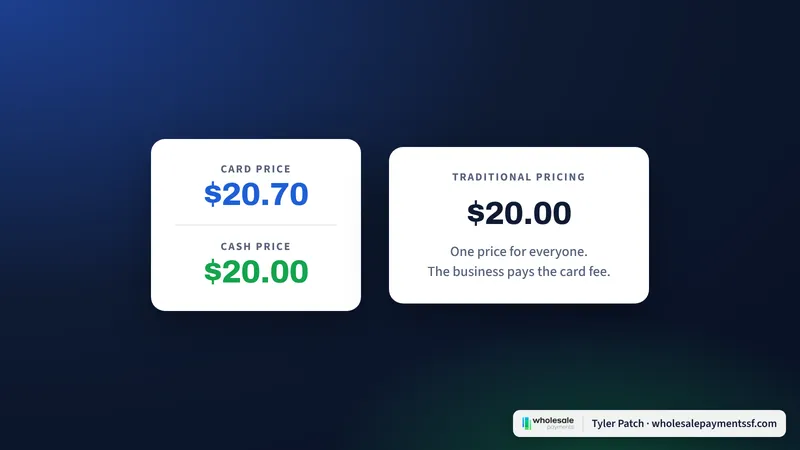
With a cash discount or dual pricing program, the card price covers interchange, network fees and markup. It doesn't matter if the customer uses a premium rewards card, because the processing cost is covered either way.
Find interchange on your statement
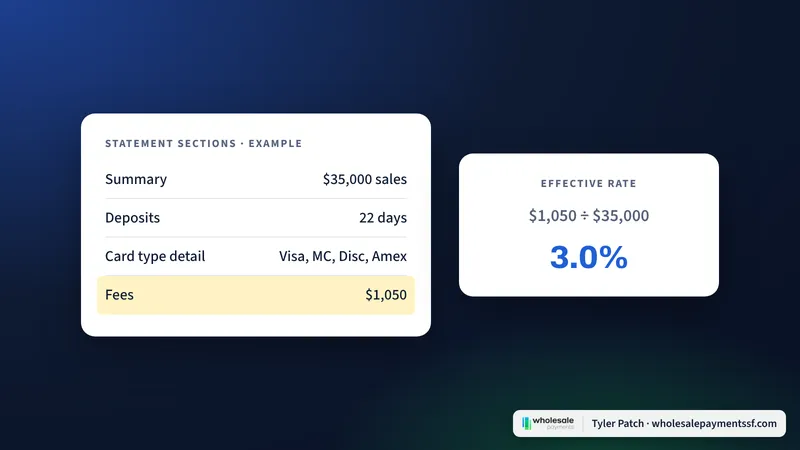
Many statements list interchange by card type in a long table. Others bury it in a single line. Learn to read yours in how to read a merchant statement.
Frequently asked questions
Who sets interchange fees?
The card networks, like Visa, Mastercard and Discover, set interchange rates. They're paid to the bank that issued the customer's card and are the same no matter which processor you use.
Why do rewards cards cost businesses more?
Rewards and premium cards carry higher interchange rates, which help pay for the cardholder's points and cash back.
Can I avoid interchange fees?
Interchange itself can't be negotiated, but with a cash discount or dual pricing program, card customers cover the processing cost, including interchange.
Questions about your own setup? Text Tyler.
General information only, not legal, tax or financial advice. Card network rules and state laws change, so confirm current rules before you change your pricing.