Credit Card Processing Fees in 2026: What Small Businesses Really Pay
Most small businesses pay between 2.5% and 4% of every card sale once every fee is counted. Here is where that money goes and what you can do about it.
The three parts of every card fee
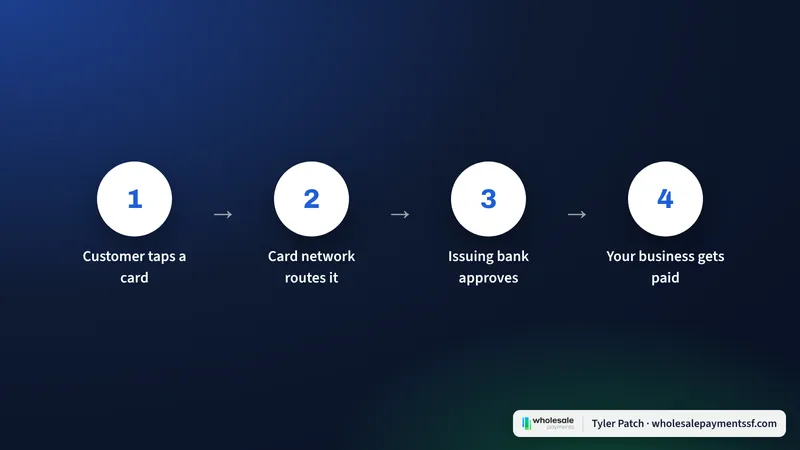
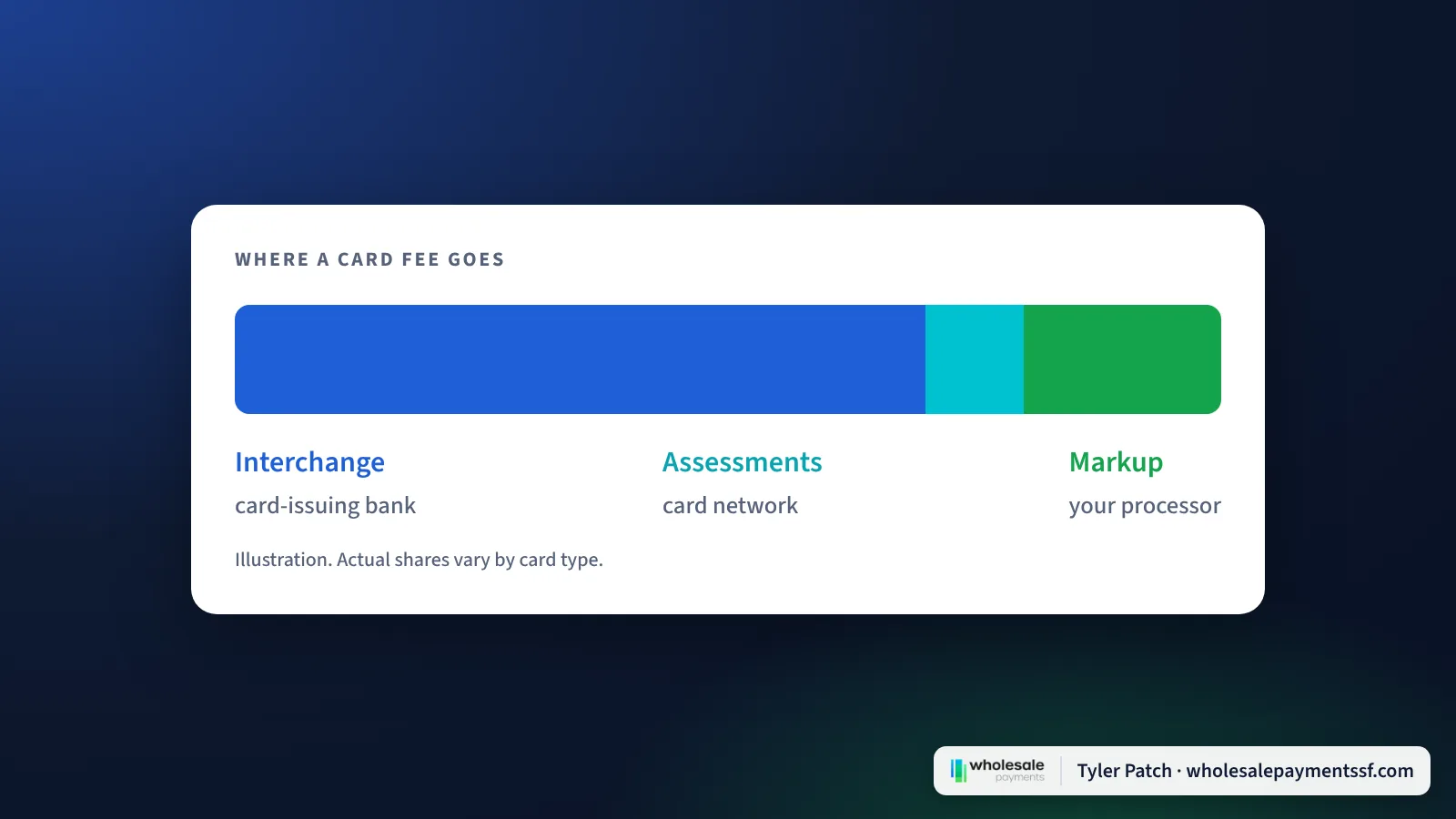
Every time a customer taps or swipes, three groups take a cut:
- Interchange. Paid to the bank that issued the customer's card. This is the biggest piece, and it is set by Visa, Mastercard and the other networks. Read interchange fees explained for the details.
- Network (assessment) fees. A small percentage paid to the card brand itself.
- Processor markup. What your processor adds on top. This is the only part that really varies from one provider to the next.
What small businesses typically pay
| Business type | Typical effective rate |
|---|---|
| Retail, in person | 2.5% to 3.5% |
| Restaurants and bars | 2.7% to 3.8% |
| Online and keyed-in | 3% to 4%+ |
| Small ticket (coffee, convenience) | 3% to 5% on small sales |
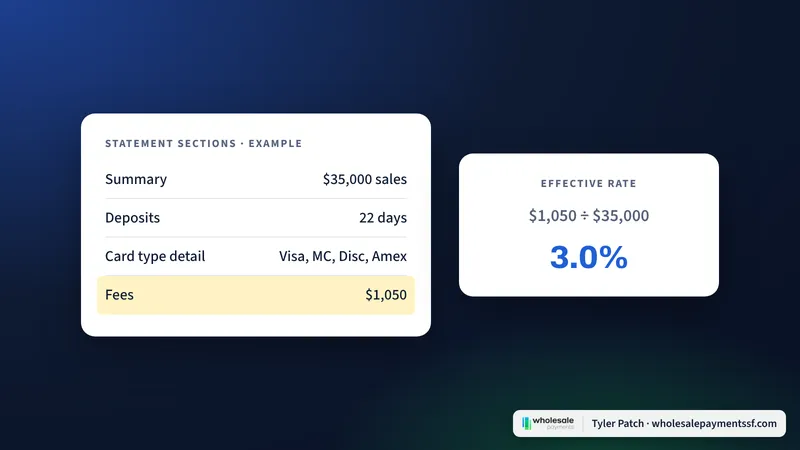
Your effective rate is the number that matters. Take the total fees on your statement and divide by your total card sales. If you did $30,000 in card sales and paid $960 in fees, your effective rate is 3.2%. Try it with the card fee calculator.
The monthly fees nobody mentions
A low rate can hide a stack of monthly charges: PCI fees, statement fees, batch fees, gateway fees and equipment leases. We list nine of the most common in hidden credit card fees on your merchant statement.
Pricing models, in plain English
- Flat rate. One percentage on everything. Simple, but often the most expensive as you grow.
- Tiered. Sales get sorted into "qualified," "mid-qualified" and "non-qualified" buckets. Hard to check and easy to inflate.
- Interchange plus. You pay the real interchange cost plus a set markup. The most transparent traditional option.
- Cash discount or dual pricing. Card customers cover the processing cost, so your processing fees drop to near zero. See how cash discount works.
How to pay less
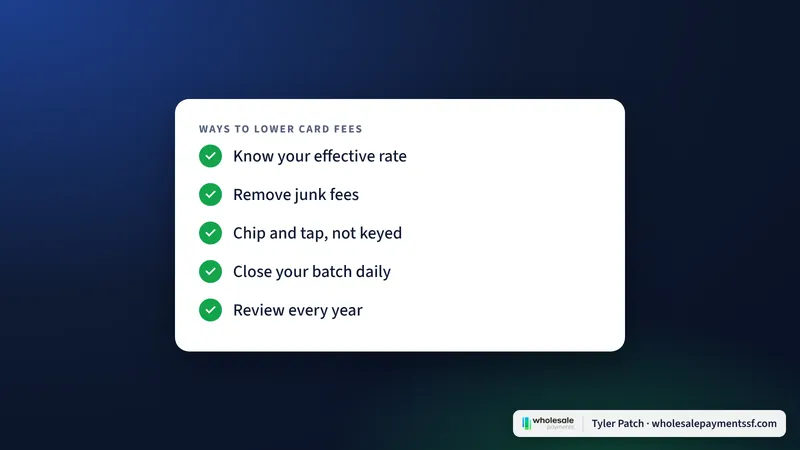
You have two paths: lower the rate you pay, or stop paying it. We walk through both in how to lower credit card processing fees. For shops and restaurants with lots of card sales, a cash discount program usually saves the most.
Frequently asked questions
What is a normal credit card processing fee for a small business?
Most small businesses pay an effective rate between 2.5% and 4% once interchange, network fees, markup and monthly fees are added together.
How do I calculate my effective rate?
Divide the total fees on your monthly statement by your total card sales for that month. Multiply by 100 to get a percentage.
Can I avoid credit card processing fees completely?
With a compliant cash discount or dual pricing program, card customers cover the processing cost, so your processing fees can drop to near zero. You still pay any program fees listed on your application.
Questions about your own setup? Text Tyler.
General information only, not legal, tax or financial advice. Card network rules and state laws change, so confirm current rules before you change your pricing.